Interview
with Anders of Lash Out 2012
By
Bradley Smith
 One of the hardest, yet memorable
hardcore bands to
devastate the underground, Lash Out, came out when the hardcore scene
was
becoming darker and more metallic. How do you Lash Out´s style and what
did you
think Lash Out´s place was in the hardcore scene back then? Or do you
think
Lash Out were more outcasts in the scene?
One of the hardest, yet memorable
hardcore bands to
devastate the underground, Lash Out, came out when the hardcore scene
was
becoming darker and more metallic. How do you Lash Out´s style and what
did you
think Lash Out´s place was in the hardcore scene back then? Or do you
think
Lash Out were more outcasts in the scene?
D
O U B L E H U M A N (Anders Wimpelman):
LASH
OUT rose out of the few and marginal manifestations of
musical subculture on the North West coast of Norway in the early 90s.
A
catalyst for the short lived attempt at building some kind of
alternative
”scene", was the donation of an abandoned house, made by the local head
of
state cultural affairs to the rather humble bouquet of
outcasts in the
small city of Molde: punks, skate kids, vegetarians, weirdos, radicals,
junkies, drunks, straight edgers, bullies etc.
Inspired
by the Norwegian squatter/punk bastions
"Blitz"(Oslo), and "Uffa"(Trondheim), this colorful crowd
came together, took the name "Kulturelt Alternativ" ("Cultural
Alternative"), and pretty damn soon they had a place to house their
umbrella of different "alternative" activities, a clusterfuck of non
mainstream underground culture. Thankfully for Lash Out, they also
rented out
rehearsal space for free for all bands or musicians with some relation
to the
misfit family. It was a nasty and stinky hellhole of a
room, in the cellar
of the house, which had a tendency of turning into a goddamn fridge
during the
Norwegian winter. However, alongside a minimal amount of descent
equipment and
buckets of enthusiasm, it proved good enough for us to produce some
kick ass
music, with an appeal that transcended the local point of view, which
was
sparse and dubious anyway.
Me
and Vegard hooked up and befriended during the
occasional punk/hardcore show at Kulturelt Alternativ. I think the idea
of Lash
Out crawled out of a rather intense mail correspondence between me and
Vegard
when I still lived in Kristiansund. I moved to Molde straight after
finishing
high school, officially to study political science, though my real
motivation
undoubtedly was LASH OUT. I had already sensed the potential of the
band during
my initially trip to Molde to rehearse with them in April 1992. I
founded a
similar "scene" in my hometown Kristiansund (70 minutes drive from
Molde), where LASH OUT did their debut show, supporting Life
But How To Live
It? in November 1992. I am pretty sure a
video of this show is
available somewhere.
I
guess I had a vague idealistic notion in the beginning,
of being in a band belonging to a certain crowd or taking part in any
bigger
happening, goals to achieve together, others than individual agendas
and
personal drives. Maybe I had all those divine landmarks of sound and
style in
history book of Rock N Roll in my mind as I dreamt of a scene that
eventually
grew a stylistic dimension of its own; Detroit, NY, LA, DC, NY and
Boston etc.
However,
This Was Molde, Not L.A [1].
When proportions get as small as in
the outskirts of a country that counts so few heads to begin with
(around 5
million altogether), in addition to the stubborn protectionism
of the
totalitarian "social democracy”, there is simply no sociocultural soil
to
plant those seeds of a vital alternative three, able to grow branches
that will
stand independently despise belonging to the same organic unit.
Of
course you could say that such an environment, not
getting the chance to form a musical clique with kindred
spirits, can be a
pretty tough one, at least in terms of motivation, feedback and
support. When
it comes to the vitality of the music, however, these semi rural
conditions
requires such a stylistic independence and individuality that
this it is
almost bound to be the sound of a strong willed artist, music with a
genuine
quality to it. The one single band that makes it out of the dim
rehearsal
spaces that once were inhabited by many dreams and juvenile hope
usually tends
to mark the spot and stand out from the blueprint. Redefine the
blueprint. ‘
We
were a hardcore band unable to create a generic and
formulaic copy of the US classics, even though we tried hard in the
first
period. It was impossible for us to fall into a defined template, in
music, lyrics,
style or personality. As already the cover of The Darkest
Hour 12”of
1993 foretells, Lash Out seemed to drift into a similar sphere as Integrity,
opting for a darker path of Gnostic mysticism, an ambivalence towards
the
dualistic take on the world, angels and demons, the biblical battle of
good and
evil, with a resonance for occultism and horror epics. Applied to a Rimbaudian
season in the purgatory of the mind, the ecstasies of metaphorical
violence.
What
happened that caused Lash Out to break up? It
seemed like Lash Out was only (gaining momentum and then disappeared.
And what
events transpired to cause you to decide to reform? Is Lash Out a full
band
again or are you only playing live shows?
D
O U B L E H U M A N:
For
my part of the story, the departure from the band at
the end of ´96/beginning of ´97 should be read along the lines of a
strictly
personal process of change, that reached a point where getting out of
the band,
as well as the scene, seemed both inevitable as the only reasonable
thing to
do. Maybe it had, to some extent, something to do with the creative
void
and the expressive confusion that haunted the aftermath
of What
Absence Yields, but this turn, on my behalf, was indeed both
expected and
anticipated;. I guess it was the good old coming of age, a boy growing
into a
man and so on.
I
had already formed my first shoe gazer band shortly
before joining Lash Out, and was definitely getting more and more into
the
diversity of the Indie genre and the somewhat softer and more melodic
aspects
of rock music. Of course I would later become an easy victim for the
whole
revivalist experiments of the early 90s, first as a dedicated follower
of retro
Mod fashion, before suddenly realizing that a
“Mod(ernist)” in the year
of 1995, probably would wear Nike AirMax and
listen to Goldie and
Autechre. So I jumped on to the next wave of retro
culture emerging
from UK, mainly through the music press, Romantic
Modernism, which
was a revisit back to the flamboyant mannerism of New Romantics,
flirting with
makeup, half ridiculous haircuts and tight shirts in silk and flashy
fabrication. I bought shitloads of essential early 80s vinyl,
discovered
some of the most important artist for me to this very day,
Japan, Gary
Numan/Tubeway Army, John Foxx, Ultravox, The Human League, Talk Talk etc.
Romo lasted just as short as Mod, but to me it was nevertheless
valuable
learning, moving in direction of an outlined and fully developed
artistic
independence.
I
also had a new band at the same time, Swimsuit,
which
suddenly became a approximately full time commitment, more than enough
for me
to handle besides my studies, the model career and a lot of partying as
well. I
never turned back or felt any regret for quitting Lash Out, as I felt
the band
could not fulfill my needs and vice versa. I never got that long break
from
hardcore though, picking up a weekly task of deejaying punk/hardcore at
this
live venue in Oslo late ´96..
No,
Lash Out is by no means set for any serious or real
comeback. This possibility has not even been discussed, as far as I
know. It
even took us some time to agree on the Integrity support show, as well
as the
follow up support for Kvelertak 2 days later.
However, we all seemed to
agree on the fact that playing together again was a total blast. From
the first
rusty session in the rehearsal space to the electrified moment of
standing on
stage together again, lashing out one last time, at 100 percent. I
still felt
the same burning joy of performance, the release of energy and the
rushing sensation
of artistic strength, an immense pride of solid work. I was still able
to give
all of my focus and voice to the moment. Just like back then, I ended
up with a
sore throat, of
course.
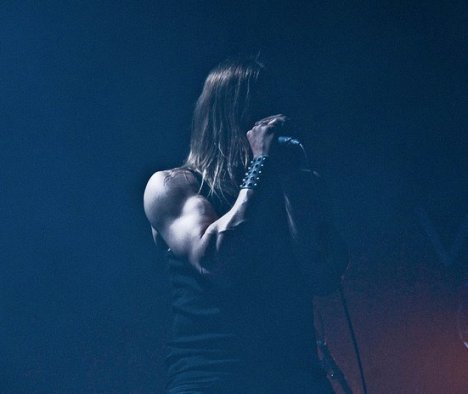 On a similar topic, How has it been
playing all
these new shows again? Has the band fell right back into the “good old’
days”
feeling or has it been a different atmosphere for the members? Which
bands have
you been most excited to play with and which shows do you think have
been the
best? I am sure hitting the stage with Integrity must have been intense!
On a similar topic, How has it been
playing all
these new shows again? Has the band fell right back into the “good old’
days”
feeling or has it been a different atmosphere for the members? Which
bands have
you been most excited to play with and which shows do you think have
been the
best? I am sure hitting the stage with Integrity must have been intense!
D
O U B L E H U M A N:
I
guess this question and respective answer will overlap
the previous to some extent. These two concerts were, without the
slightest
thread of doubt in mind, two events I will look back upon on with a big
smile
on my lips and a feeling of complete satisfaction in my chest. My
involvement
in Lash Out were of a crucial importance to my life, no less, and I
would not
been without a single moment of our time together. Like Youth
Of Today
once phrased it, “A Time We ll Remember”[2].
As
we all know a thing or two about, age certainly takes
its toll on the bodily constitution. I presume there was an obvious
difference
in the energy level of the band on stage at 2011 compared to the best
shows
back then. Man, a typical Lash Out show in the years of 1994-95 was
intense out
of the ordinary, that s for sure. I remember shows that were so
exhausting I
had to puke mid ways, though in a much less dramatic and, literally
speaking, in
your face way than the cartoon Sid Vicious
in some Sex Pistols
video. I ran into some toilet backstage, threw up and got back while
the band
was into one of those trademark instrumental parts of What
Absence
Yields period of Lash Out. Practically, every member except
Vegard (drums)
was off ground at least one third of the total performance time,
jumping around
like maniacs or stage diving while screaming into the microphone or Strifing[3]
a pose.
It
is safe to say that the 2011 version of Lash Out was a
grown up and thus much tamer one, counting number of jumps and energy
outbursts
during our performance. Personally, I was in super shape for my age to
be,
though I might have placed too much effort on the looks and not the
hardcore
show endurance. Both me and Andreas were long haired and definitely
more on the
metal tag than ever before, me sporting singlet, leather glove with
spikes, and
the Iron Cross around my neck(both the traditional allusion to Motörhead,
but
also my personal homage to Darby Crash(RIP) of The
Germs). It
felt much closer, for me at least, to an essence of what Lash Out was
all
about, at least in terms of music and lyrics.
I
guess these two 2011 shows displayed a new
face
[4]
of the band in appearance and overall
impression, for better or worse, depending on the eye and ear of the
beholder.
Both me and the other guys thought it sounded much better, technically
adept,
and meaner than before, but one never knows how much the instance of
self
esteem or maturity effects the actual perception of one’s own music.
We
had no plans whatsoever for a Lash Out reunion show
prior to an opportunity that seemed all too perfect for us: Supporting
a band
that for us, right from the start, had a considerable impact on both
our
stylistic and lyrical approach, as well as the sheer identity of a band
that
sounded all too metal and sinister for emerging from a scene that was
supposed
to be more about fast straight forward music and the political
consciousness.
Personally,
I loved Integrity and the whole Cleveland
clique from the very first song I encountered, probably fall 1990,
which should
be “Live It Down” on their brilliant debut single. Needless to say, we
were all
completely sold when For Those Who Fear….[5],
even doing cover of “Micha” during the
entire first European tour of ´94. Watching them on stage during the
sound
check before our show in Oslo January last year, sporting Darkthrone
tees and stuff, just gave me a sense of the perfect closure for Lash
Out, like
the circle was completed in some way or the other. I am still to this
day a
passionate supporter of the band, in fact, I ve been listening a lot to
their
recent split EP with US band Gehenna lately,
probably their most solid
release for quite some time. I am also quite fond of related acts like Bowel,
Ringworm, Confront, Meanstreak etc.
In
experience as a whole, I will probably rank the
Integrity support show pretty far up on the list, most definitely. Of
all the
bands we have ever played with, we were fortunate enough to make our
live debut
supporting the best of them, the Norwegian melodic hardcore band Life
but
How to Live It? Other great bands we have played together
with are Motorpsycho,
Down By Law, 108, Refused, Abhinanda, Fireside, Burst etc.
Speaking
of the very last show we did, supporting Kvelertak,
I would probably say they were one of the tightest and most hard
rocking bands
I have seen in the context of playing with Lash Out. The ever busy Cred
Police
might have their points regarding the guys kind of geeky and plastic
image,
like hipsters picking up on metal and “LA Ink”, but who the fuck cares
about
image when the music knocks you down, lifts you up and sucks you into a
furious
and speeding beast of excellent craftsmanship and head banging grooves.
Especially their drummer impressed the shit out of me. I m no big fan
of the
band on record though; guess I am a bit too old and way too much into
the purer
forms of both metal and hardcore, but these boys deserve a mention
anyways,
also being nice guys and Lash Out fans.
 What
was the Norwegian hardcore scene like back in the
early to mid 90s? What foundation was there that influenced the members
of Lash
Out to play hardcore or were you basically building a scene from
scratch?
What
was the Norwegian hardcore scene like back in the
early to mid 90s? What foundation was there that influenced the members
of Lash
Out to play hardcore or were you basically building a scene from
scratch?
D
O U B L E H U M A N:
Imagine
the whereabouts of Norway. Prior to oil and weapon
industry, you might have had to strive to find any good reason to
settle down
on this soil on a permanent four season basis. Make no mistake, the
nature up
here is probably the most beautiful you will ever get exposed to, but
the price
one must pay in order to live in the midst of it, should not be
undermined in
terms of a geophysical difficulty. After all, we are a nation situated
on the
very edge of human existence; the winters are long and cold, summers
are
equally short and not particularly warm or sunny either. Some of the
terrain is
challenging to the maximum, practically isolating specific rural parts
of the
land more or less completely. The less central areas of Norway remains
even
today a pretty far cry from the cosmopolitan world.
Among
5 million people raised on dead pan politics, modesty
and the most vulgar forms of pop culture, you certainly find a weirdo
hardcore
geek here and there. Nevertheless, but before The
Year Punk broke, with
the commercial success of Nirvana in 1991, you
could not find enough
marginal men outside the big cities of Norway to build the hardcore
community
we had only read about in foreign fanzines. I see no reason
to complain
about this situation, as there are huge benefits of developing musical
skills
entirely on your own instead of continuously picking up others creative
vibes.
Back
in my hometown by the year of 1990, there were
probably fewer than 10 people aware of the fact that “hardcore” could
refer to
anything else but pornography. For some reason, things were slightly
different
in Molde. Both being a physical part of the mainland, as well as the
host of a
yearly Jazz festival, the town had a credible past on the subject of
punk,
raising bands like Anfall and Bannlyst,
both holding eminent
positions in the national legacy of the genre. This was the prelude of Kulturelt
Alternativ, an institution with roots as long back as 1980,
even though
this first incarnation also failed to establish any “scene”, regarding
music or
cultural/political identity.
The
tendency seems to prevail: If you are unable to stick
to the one and only Main Street of the city of Molde, almost in double
meaning,
you are prescribed the final solution of getting the hell out. Of
course, just
like Bannlyst also did years ahead of us, we never hesitated about that
decision and relocated to Oslo as soon as we had the chance.
However,
when Kult Alt formed in late 1989, the clique were
counting maybe a dozen kids who got into punk and hardcore through
their
involvement with skateboarding. Just like me and a couple of my native
Kristiansund friends, they had stumbled over artists such as Circle
Jerks
and RHCP in the infamous Thrashin
motion picture of 1986. Later
we got exposed to a large number of commercial skateboard videos, and
they all
featured soundtracks packed with the likes of Black Flag,
Dead Kennedys,
Ramones, Adrenalin OD, Misfits, The Accused, Minor Threat, Bad Brains,
Uniform
Choice, Descendents etc.
The
whole US second generation straight edge HC trend
somehow reached these shores in late ´89, and thanks to the quality of
excellent bands like Judge, Gorilla Biscuits, Turning Point,
Youth Of Today,
Instead, No For An Answer, Inside Out, Burn etc, it actually
“hit it big”,
within the tiny circle of maximum 20 kids altogether. Some bands were
formed,
among others the infamous Last Straw, with Bjørnar
Lash Out on guitar.
If you ask me, European hardcore did not get much better in 1990 than
the LS
demo released late December 1990.
Frank
and Vegard also had this band called Invert,
playing pretty straight forward and basic Hardcore. I remember they
played a
cover of Insteds “Good Things” the one time I heard
them play. Back in
my hometown I formed my first proper hardcore band in 1991, a full on
straight
edge/vegetarian band called Breakpoint(Back Down).
Back Down will reform
in near future, to record the 7” that originally was meant to be
released on
Stormstrike Records.Previously, both me and the rest of the guys had
played in
different punk bands, like Åndseliten, Sure Oppstøt and
Rolf Einars
Datatips. The latter can be seen/heard on youtube.
You
recently unleashed your Judas Breed upon the world. Why
was the album not released when it was originally recorded back in
1998? And
how did the 2CD discography release come to exist? What does the CD set
feature
and was it difficult compiling all those different recordings in one
place?
D
O U B L E H U M A N:
I
am not the right person to provide an answer to this, as
I was not involved in the process at any point. Anyway, I am definitely
satisfied with the result of it.
Your
album is available at all of Norway’s libraries thanks
to the Norwegian Arts Council. How did that come about and how does it
feel to
be recognized as culturally important enough to merit the council
ensuring that
all of Norway has access to it?
D
O U B L E H U M A N:
I
am not really familiar with how that came about, though I
have a pretty plausible theory: Our generation are slowly sinking into
the mold
of establishment, even that skinny kid in oversized tee, slam dancing
at our
concerts and carefully order 1st pressing of
every release. The kid
eventually grew up, took a bachelor in cultural studies, graduated and
winded
up in some hot shot vacancy at some department. I think it is by all
right the
band ended up in every library shelf in our home country. Hopefully
side by
side with some of the finest metal we ve got over here.
Lash
Out came across a rock expression that would have
impossible to have predict; frankly we did not seem to have any control
of the
creative direction of the band either, drifting towards a sound that
most
definitely defied any rigid descriptions. The Worn
Path was
in fact a road of pioneers, If I must say it myself.
One
thing that I always wondered was when Lash Out was
emerging and becoming known, Norwegian black metal was sweeping across
Norway
and the underground in general. How did this affect Lash Out? Did it
make it
hard for you guys to get the attention you deserved or did it set you
apart
from that movement? I remember VERY Distro said that you guys were
“doing the
Norwegian black metal gods proud.
 D
O U B L E H U M A N:
D
O U B L E H U M A N:
I
was born in the same year as many of the Norwegian Black
Metal pioneers and like them, I sold my soul to rock n roll at an early
age.
Starting out with KISS, who I totally worshiped for
many years,
and then I guess I moved on to Led Zep, Black Sabbath, Alice
Cooper, Iron
Maiden, Motorhead, Quiet Riot, Accept, Scorpions, Krokus, TNT, Judas
Priest,
Twisted Sister, Van Halen , AC/DC, Uriah Heep, Deep Purple, Blackfoot,
Ozzy
Osbourne and Mõtely Crue.
I
dug metal from day one, though I never grew long hair or
dressed in tight black, simply because that was no option in my home,
There was
no room for the occasional freak out in hair, leather and makeup, which
brought
me closer to pop music, where my visual identity seemed to be more in
place
with the parental expectations. Asta Kask once
said, the rebellion and
true substance of Punk is located within your soul, not in the Mohawk.
I
comforted myself with that line for years, compensating for the leather
jacket
with circle As and spiked hair, by going as deep as possible into both
the
musical realms, lyrics and politics. I reckon I became a more or less
total
geek, which I guess can explain why I remained more or less untouched
by the
tender hand of the opposite sex during high school.
My
enthusiasm for metal awoke again in the year of 1986;
speed metal was on the verge and I guess what intrigued me most about
it, were
the many similarities with punk, especially the faster stuff I was into
at the
time, D.O.A, Subhumans, Conflict,
Chaos UK, English Dogs, GBH,
Discharge, The Exploited, Vice Squad, Partisans
etc. It helped a lot
to see all these proto type metal band photos at the back covers of
their
classic albums, all members with their arms crossed on chest, mean
looks at the
camera, all sporting black band shirts. I took notice of the tendency
to pick a
band or artist from the more credible sections of punk and
hardcore/cross over segments;
Misfits, Black Flag, Minor Threat, D.R.I., Corrosion Of
Conformity, Suicidal
Tendencies, Agnostic Front, Gang Green
and Warzone.
When
Thrash Metal became the hot new flavor of
the metal universe, I got heavily into bands like Megadeth,
Metallica,
Venom, Bathory, Testament, Sodom, Exodus, Anthrax, Kreator, Morbid
Angel S.O.D,
Pestilence, Sacred Reich, Nuclear Assault,
Entomed, Carcass, Candlemass,
Metal Church etc. Discovering Possessed and
hearing the Scream
Bloody Gore album with Death brought me
even further into it, and
this was shortly before I encountered one of the most influential metal
album
of all times..”Reign in Blood” by Slayer. Napalm
Deaths “Scum”
album was also another great landmark and, of course, Hellhammer/Celtic
Frost were also important names to me.
Thanks
to this Oslo cable TV that also reached the 2 hour
drive away house of my father, whom I usually visited in vacations,
this club
in Oslo called “Bootleg” used to broadcast some of their shows on
Friday
nights. Together with some of the less timeless Norwegian punk/hardcore
stuff I
was into at the time, I also encountered many of the Norwegian
Thrash/Death
metal exponents of those days, I think I saw Red Harvest,
Equinox, Cadaver,
Decadence and, most important, the mighty Darktrone,
which remains
my all time favorite Norwegian band, no matter genre of music. This was
of
course before Euronymous of Mayhem had put his
blackening magic spell
upon the band, so they played traditional death metal songs, 10-15
tempo shifts
per song, which in technical aspects really impressed me in those days.
I
bought the Soulside Journey (Peaceville, 1991)
album as soon as it came out and liked it a lot, though not in the same
sense
or degree as the “unholy trinity”[6]
to come. In the meantime, that span of time
that passed before the religious experience of hearing A
Blaze In The
Northern Sky (Peaceville,1992) for the first time, I remember
reading the
very first Mayhem interview in Billy Cockroach
Clan(ex-Mayhem/Within
Range)s fanzine “Panic”, where they talked
about the suicide of Dead(ex-vocalist
Mayhem, RIP) and also hinted heavily about putting some of his brains
into a
stew and of course also the legendary photo session that later made it
to the
cover of Dawn of the Black Hearts bootleg
release, depicting Dead
lying on the floor with all of his brains blown out and the shotgun
lying
beside him
Hearing
A Blaze In the Northern Sky for the first
time, down in the cellar apartment of this Molde sXe/vegan skater who
was some
of a metal connoisseur, really took me by surprise
and a feeling of
being possessed of a fascination that is somehow forbidden. Having
already good knowledge of the band, the conventionally well produced Soulside
Journey album, I was shocked to hear they now sounded like
they barely
could play the proper version of metal, forced to approach it from
another
angle; creating an atmosphere of sinister pagan rituals and Satanic
invocation.
Deep into the Norwegian forgotten woods, which also
displayed a group of
technically adept musicianship, which was kind of required for the job
of
playing death metal in those days. This guy also introduced me
to both Mercyful
Fate (today one of my all time metal faves), The 3rd
and the
Mortal and Diamanda Galas as
well.
I
became deeply fascinated by everything about that album,
the intended sound quality, like it was recorded in a dark coven cave
high up
in Jontunheimen[7].
The simple riff and arrangements,
some kind of metal played with a Diabolic Punk feel to it, the almost
static
grooves of blast beats. The haunting witchy vocals, a much treasured
change for
my ears compared to the, after a while, almost comical grunts of the
standard
Death Metal outfit, especially bands like Cannibal Corpse
and Benediction,
an exaggerating tendency that made me fall out of metal for a
while.
Of
course the epitome cover did a considerable impact on
me, instantly reminding me of my beloved KISS, Alice Cooper, kind of
fused in with
images of dead people from various horror classics from the 70s/80s, as
well as
Nosferatu [8]and
the German expressionism in film
in general. I was also told by my skater friend that the guys had moved
out in
the woods to worship Satan and stuff, which made me even more
fascinated.
A
bit later I heard Burzum debut for the very first
time, actually right before the churches started to burn down and media
created
the image of “Devil Worshipping” misfit youth running totally wild and
all that
stuff. I remember being really stoked on the atmosphere on that record
and
vocals that had a really unique edge. I even visited the “Helvete” shop
once,
an episode that also left certain impressions on me; it was so dark in
that
shop, you could barely see which record cover you held up. I don t
exactly know
who stood behind the counter that day, but I have a hunch it was
Euronymous
himself.
The
only problem of my fascination with Black Metal those
days, were the ethical responsibility we definitely felt in the first
years of
Lash Out. Everything was supposed to be that goddamn political correct
according to the dominating trends in US hardcore. The media created
picture of
Satanism and the Black Circle was by no means
elements that were
possible for us to dig, at least not officially, so we had to choose
the
sublime approach, a growing tendency to a darker sound, darker themes
in our
lyrics and of course my high pitch vocal style of Worn Path
and What
Absence Yields. The latter was of course a direct influence
from Norwegian
BM, especially Burzum and Darkthrone.
I guess Lash Out later
would prove to the maximum how much importance we placed on the metal
“nature”
of our music. Speaking of the subject, it is safe for me to say that me
and
Bjørnar have a pure and orthodox Black Metal outfit coming up, Vinterblek,
please check it out if you are into the first generation of Norwegian
Black
Metal, as well as the contemporary “Nidrosian” style of new and young
BM bands
from Trondheim, which has become a genre of great passion for me, at
least.
 Are
Lash Out a political band? What do you think about
the recent political and social upheaval in Egypt and the Middle East
in
general? How was it for you witnessing on your TV and computer the
effects of a
true movement of the people as they toppled corrupt governments?
Are
Lash Out a political band? What do you think about
the recent political and social upheaval in Egypt and the Middle East
in
general? How was it for you witnessing on your TV and computer the
effects of a
true movement of the people as they toppled corrupt governments?
D
O U B L E H U M A N:
Well,
both me and Vegard were most certainly into politics
at the time we started up the band, both studying political science at
the
university and also loosely linked to the traditional leftist
radicalism, the
underground "resistance" of punk culture; a blend of grassroots’
topics like anti-multicorporate, anti-exploitation of the third world,
anti-nuclear weapon, anti-racism, animal rights, anti-bullfighting,
anti-whale
hunt etc. We basically tried to take the anarcho-punk ethics and its
political
legacy, remove the worst ideological implications and then infuse the
importance of individual beliefs taken into action, both on the
personal level,
like straight edge/vegetarianism/lifestyle/consume/social interaction,
combined
with direct action, from demos to illegal sabotage, which I personally
was
involved in and even organized at the peak of my maybe not so innocent
idealism. I do not regret it. Amor Fati,
as Nietzsche once wrote.
Nevertheless,
as soon as my thesis in international comparative
politics was written and those first novels of Oscar Wilde,
Charles
Baudelaire and Joris-Karl Huysmans
were read, my focus of
analysis went into a critical state of change. My interpretation of the
projections I sensed in this world, had apparently reached a stage of
maturity,
wisdom and insight where the life conditions of the temptress Herself,
Idealism, ultimately had no place, I remember realizing to myself that
the steps
toward change
I had taken, was a solitary mission completely in vain, with regards to
the
possibility of realizing the doctrine laid forth by this slogan.
The
parliamentary representative democracy works on the
grounds of the magician, distracting real sensorial observation and at
the same
time creating an illusion of a real influence, indirectly, on the
forming of
our common rules. Ok, since I saw Paul Stanley and KISS on television
at the
age of 6, I was probably never set for a life in more conventional
world
anyway, at least not the political arena or the established media. I
would
never have found myself at ease with a job I thought was dull or
impossible to
stand out in the long run. Politics, conventional business and
basically most
realms of the collective and social life, are not the bearing pillars
of my
existence or creative production. Getting that idealism out of my
circuits of
reflection was by all means good riddance.
Unfortunately,
our time is still floating over with false
signs of something better to come, sold through all channels of
mainstream
media and the tentacles of the state. Despite the total lack of
empirical
knowledge on the efficiency of abrupt change and revolution, the web of
manipulated mythology still hang over our heads, still able to trick us
into
obedience through the cheap seduction of a sublime romanticism, the
heroism of
the revolutionary, who liberates his comrades by building up the
collective
trance of destruction, murder and self-annihilation to a bursting
point. The
temperature always raises high enough, if there is no intervention or
action
taken against it, to reach a climax where self restraints, the
institution of the
“free will”, vanishes into a fog of chaotic confusion and senseless
emptiness.
That
fact that their political, economical, technological
and legal systems of modern civilization have become very complex to
fully
understand, any less handle or control, never seems to worry the
participants
nor the spectator during the heat of the events. It has a lot more in
common
with the social phenomenon of a party that has slipped out of control,
than a
well administrated mass political act. I see it as a vulgar
display of power
[9],
a mass hypnosis into seeing an illusive
force emerge out of their corpus of unity.
The
revolutionary theorist has always put too much faith in
a presumption of an existing universal interest for sociopolitical
life, a hint
of a care that includes one self as the others, as he also dreams of
such a
thing as a constant and incorruptible sense of justice, which beats
proudly
inside every human heart.
The
story of the Cuban Revolutionary hero, Ernesto
"Che" Guevara, is the textbook example of this. The famous
rebel
chose away a good position in the Cuban power elite, a life of fine
women, excellent
food and wine and luxury, because he thought that he alone could
initiate a
peoples' revolt, almost by his sheer presence. Like some modern Jesus
Christ,
raging violently against the ruling class who controls all means of
production
and exploits the workers just to get fatter and richer. Much in the same
manner
as Baader Meinhof, Guevara thought the central
points in the Marxist
analysis of how things work in every “capitalist” and “fascist” society
, were
common knowledge, all too obvious and logical to ignore or disagree
with.
Guevara
had a firm belief in the peasants of Bolivia. He
thought they would support his little private revolution, as soon as
the time
was in, because they were believed to agree on the same conclusions as
he had
reached through his Marxist take on the conditions of their labor and
existence: they were subjects of an inhuman exploitation, both of their
labor
and their agricultural products. Thus Guevara was convinced that looked
upon him
as the true guidance out of their capitalist misery; they would hide
him and
grab their weapons in defense of him, their liberator and
charismatic
leader. He was proved dead wrong and the fairytale cracked wide open.
His
destiny was nothing but meaningless, sad and pathetic. At the end of
the day,
he had brought along just as little changes around for the better as Jesus
Christ.
All
revolutions in the political sense of our history have
never been much more than a rowdy collective escapes from mundane
realities.
Alternatively, you might get away with the description of it as a
grotesque
form of amateur entertainment, with an escalating violent swing that
usually
takes its toll on the “revolutionary” frontiers; the police, innocent
bystanders and the surrounding buildings, properties, cars, stores etc.
Much
more than a rational political act, it is a social
event expected to run wild in an unpredictable chaos, that it the real
thrill
of it all, not the big and honorable slogans of “liberty and justice”,
a load
of boring politics that never manage to mobilize the same sparkle in
the eyes
of the mob. The often total lack of preparations, organization or any
specific
direction of their disobedient wave of mutilation, a drunken search
&
destroy, should be clear ringers for the outfall.
Instead
of the fantasized link between an envisioned
awakening of the masses, leading to a justified and inevitable reaction
in fire
and blood, it is much more likely to be spawned by reasons of a less
admirable
and sympathetic credo. Getting up from the couch and the TV is far more
likely
to be triggered by boredom and a possessed hunt for adrenaline. The
bonus could
be, if it hits on big, the possible enchanting feeling, in retrospect,
of “I
was there, in the middle of the heat and crossfire”. “Once I smashed a
police
car”, the old fella brags to his grandchildren”.
The
Burning rage that terrorizes the streets by all means
accessible might not ever have left the personal levels or the
egocentric
points of view. How naive one must be to reason that this fire in their
eyes
could only be glimpses of the flame of revolution, set ablaze by
bombastic
pamphlets or theory on radical change.
What
they in reality bring out to the hordes and their
angry fists in the air, “clenched tight, to hide the humdrum and dull
material
inside”[10]
are general frustrations, old grief and
long grown bitterness, the anxiety of modern living, sadistic fantasies
about
to get “a chance to shine”, to say it with the words of the good old
Mozzer.
Needless to say, bringing it even closer to the concept of a party,
there are
also bags of alcohol, to make it even more memorable, smashing empty
beer
bottles in the boardwalk or even using it in a Molotov cocktail.
 The
working motor of any revolution is without doubt the will
to riot, violence and destruction, which seems bound to be
released at any
price. If the rebels without a cause are unable to get off by torching
down the
official state building, the embassy or the local police station, you
bet they
will compensate with ANY thinkable alternative, like Jello
Biafra points
out in “Riot”:
The
working motor of any revolution is without doubt the will
to riot, violence and destruction, which seems bound to be
released at any
price. If the rebels without a cause are unable to get off by torching
down the
official state building, the embassy or the local police station, you
bet they
will compensate with ANY thinkable alternative, like Jello
Biafra points
out in “Riot”:
But
you get to the place
Where the real slavedrivers live
It's walled off by the riot squad
Aiming guns right at your head
So you turn right around
And play right into their hands
And set your own neighborhood
Burning to the ground instead
Riot—the
unbeatable high
Riot—shoots your nerves to the sky
Riot—playing into their hands
Tomorrow you're homeless
Tonight it's a blast
Dead
Kennedys:
“Riot”
(Plastic Surgery Disaster, Alternative Tentacles,
1982)
Revolution
as a modus operandi for actual
change for the better to take a hold, like for instance a fundamentally
reformed power structure of society that will benefit most citizens, is
yet to
be proved. First and foremost, the individual drives of revolution
deals with
strict personal issues, problems or needs, “kicks”, as they say. It
seems like
the majority of the people voluntarily let themselves be civilized and
socialized into tame sheep that let the big boys, several levels above
their
own league, define both pleasures and duties. The violent bully boy
limit his
part of the common contributions for a better world down to a couple of
nights
completely dedicated to the first, and probably most arousing, phase of
the turnaround:
tearing down, burn to the ground, kicking asses, smashing windows and
cars,
lifting the local grocery store for all the booze or everything, as
with the
starved and abused people in Iraq after the fall of Saddam
Hussein.
According
to official records of history, they never seem
to regain their political conscience or sense of right and wrong, even
when the
alcohol or anger wears off and they ought to be checking out the
conditions of
the urban battlefields they more than willingly participated in
leveling with
ground zero last night. It is like having a home party where everything
gets
smashed to pieces. The day after though, you always have to rebuild the
interior all by yourself.
There
are many proofs of the decreasing interest and the
decline in the political participation of the voters. Even though it
only takes
5 minutes every 4th year, this seems to be more
than the common man
is prepared to give of his precious time, spent in front of the
television or
at the pub at any given day. Politics is dull and far too advanced for
him,
even though he really should be slightly interested in the stuff that
eventually set the premises of his mundane life. The contrast of this
passivity
and indifference arrives on the very same hour as the mob gathers at
the market
place. I always think of the great Antonin Artaud
and his performance in
Abel Gance´s Napoleon(1927), in the role of is of Jean-Paul
Marat[11],
as the visualized prototype of the revolutionary fire starter. The way
Artaud
exaggerates every movement of Marat, hints at an understanding of the
forces at
work inside him, one that does not deal with political issues
whatsoever. Not
particularly peaceful or constructive either. Later on, in the real
French
“Revolution”, they also turned to the execution of opponents, defined as
“the
enemies of the people”( an early precedes of the Stalinist rhetoric’s),
into a
National sport, cutting off their heads in the public guillotine,
located at
the same marketplace where justice finally was balanced into right once
and for
all. Not.
The
German film prodigy Rainer Werner Fassbinder(1945-82)
once made a terrific movie about the reality of terrorism, Die
Dritte
Generation(1979), which portrays the third generation of a
terrorist
group(referring to Baader Meinhof, whose undisputed
founder and leader, Andreas
Baader, had been a childhood friend of Fassbinder), counting
a wide
selection of young restless and bored bourgeois citizens who carries
out the
most extreme acts of an urban guerrilla, murder, arson and bank
robbery,
without even having one single official sentence of political
justification or
defined mission whatsoever. As some people play the football in the
field,
others gun down innocent people. Could this will to riot and urge to
destroy
have something to do with the disconnection from the natural state of
our race?
Is it the suppressed manimal [12]
inside him, breaking out and shows us his
last spasms of wilderness?
The
other side of the revolution, the eve of destruction,
is by no means as visible as the monster itself. It is quite the
opposite in
terms of having any traceable words or symbols that will serve as
evidence for
the claim of their existence. This is no random coincidence,
as these
activities are of a kind that would not stand the trial of the
different courts
of civilized humanity. The organizations of the biggest players on the
global
field of international politics have an extensive network of roots
going either
high up in space or deep down underground, literally speaking. A grown
up and
normally intelligent individual who refuses to acknowledge the possible
scenario of certain interests working outside the radars of the public
ear,
could perhaps be up for a big surprise, only time will tell.
Human
greed and megalomania have no limits, something we
definitely should know by now, as well as the fact of how the cynicism,
applied
to the master minds in the political field, can cover up or mask their
operations , also with the typical irregular methods of the people. A
society
that hails the works of Niccolo Machiavelli and
Thomas Hobbes[13],
should not be taken by surprise realizing
that “the owls are not what they seem”, to quote a classic line from
the world
of “Twin Peaks”
Any
person, who has kept up with the many events of modern
history, should be able to sense a healthy suspicion towards the real
intentions behind them, the causality kept in the shadows of the hidden
agendas
that never manifest themselves before the public eyes of the voters. If
you
refuse to believe in anything that fails to correspond to the official
version
of story, the typical phrase you will hear announced prior to any
intervention
in the Middle East, you are nothing but the perfect casus for their
cynical
plots. Every sensational event taking place in the Middle
East, is guided
and fronted by the statement forced fed by mainstream media: "We invade
this legitimate independent nation because we care so much about the
development of a democratic political rule". "We want the people of
this horrible regime to experience the "real" freedom of the
West", and what have you. As long as the population of the country
actually believes that this symbolic nature of politics counts for just
as much
as the action they promise you, we will soon find ourselves in a world
where in
fact the formulation of intent is just as good as the deed itself, the
action
they refer to.
I
refuse to be the blue eyed skeptic, laugh out loud my
contempt for those who try to make others aware of a status quo that
ought to
give us the creeps. I have studied all essential topics in the world of
politics and administrative rule, from the legal constitutions of a
domestic
voting based representative democracy, to the chaotic uncertain state
of
international comparative politics. After2 1/2 years at the university,
first
writing a thesis at the end of first course/degree on the Gulf War of
1991,
focusing on the role of Western media, and then a thesis on second
course about
United Nations, an object of careful scrutiny
through the lenses of
organization theory. Those two and a half years of a political study in
depth
and through a considerable amount of information to read and also
understand,
had a crucial effect on my understanding of politics and the real
machinery
behind all the seductive utopias of political life.
Personally,
I merely see the “Arabic spring” as just
another operation, masked as an admirable act of the “good” Samaritans
of the
Western world, carried out to make progression in a much bigger plan
before its
inner megalomaniac mind. Alexander the Great will
never be forgotten, in
the mythological pantheon of ambitious men, or in the tactical approach
to war
strategy. If you thought Adolf Hitler was the last
of his kind, or much
different from his peels in USSR or USA, you better think twice, wake
up an
take a look around. Hitler was more stupid and indiscreet, that is all,
and the
price he must pay by the human judges of the past, is to come off as
the Devil
himself, though I should rather say “Jawhe”, the Christian god who
kills 26
million people altogether during the 2 testaments of the bible, way
more people
than what is able to blame Lucifer for.
From
an ethical point of view, Josef Stalin was way
worse, counting 15 millions more victims, killed in a less human but
cheaper
way(driving “the enemies of the people” butt naked into the Siberian
night in
January, even with a cynical statement of falsification on top of it,
handed
out with a Judas grin. Think of a criminal that commits a bigger crime,
but
gets away with it by pointing in the opposite direction. This should be
the
ultimate recipe for success in that world.
Stalins
method of manipulation is very simple, though
indeed effective in its orchestrated propaganda media stunts to cover
up for
the bestiality committed behind the iron curtains. Basically, it is all
about
saying the exact opposite of what you in reality are doing. The bad
deed is
simply tagged with a positive and kind word. Still to this day people
swallow
this without thinking twice. Russians are still among the
giants of
international politics, even though they managed to declare the fall of
the
eastern block and hence call off the cold war.
I
could go on revealing the power constellations of
international politics, but there no point giving you all the secrets
when you
can find out for yourself instead. I have nothing but great admiration
for the
most advanced and sophisticated psychological manipulation systems
developed by
clever cynical men through history. Regarding the “Arabic spring”, I
can tell
you that the master plan that dictates it, is an intellectual/emotional
invention of the superior part of the game, responsible for crucial
turns in
modern history, though they possesses such skills at it, most people do
not
stand a chance against their complex spider web of illusion and slow
infiltration and manipulation of the subtle unconscious way we process
the
analytical material our brain is fed on by the perceptional
tools of
the reflecting mind.
I
can tell you that much and this is conventional
international news and not theory, that the revolution in Egypt was
initiated
in our Western world, not by Egyptian freedom fighters in exile, as you
might
think, but someone who can only have a totally different agenda at
hand. If you
look back on the revolution in Eastern Europe and Iraq, do you really
think
people in those countries see the big difference in their everyday
life, before
and after the revolution?
You
have always used really interesting and unique
Artwork for your covers. How important is the artistic aesthetic to
Lash Out
and how do you choose which pieces of art to use? Which is your
favorite piece
that you have used?
 D O U B L E H U M A N:
Lash
Out was always a band that gave importance to every
aspect of creative expression, also the ones which only deals with the
visual
qualities of the surface, artwork, graphical profile and
imagery/gimmick. Even
though this was way before I developed my sense of style and super
sharp gaze
for what looks good and not. It almost explains itself, if you ask me,
the fact
that every inch of an exhibited artwork has an equal relevance to the
experience of the spectator and thus also the same potential to play
the
crucial part in the overall judgment. This was something I personally
in
reality understood already at the age of 6, when I saw Paul Stanley and
KISS on
the screen for the first time. Those prepared to proclaim the makeup of
KISS
had no real importance to the “substance” of the artist/the performer,
should
at least underline that they are only speaking for themselves, not
articulating
a generalization or truth they should expect holds true for other
individuals,
like the 6 year old version of myself.
My
obsession of KISS and rock and roll had never grown into
giant proportions unless they came up with those masks and personas, “…the
fame and the masquerade…”, as Stanley puts it in “Do You Love
Me” from the
essential 1976 album, Destroyer (Casablanca). The
image, kind of giving
me some of the same thrills as Spider Man or Dare
Devil gave in
those days, was perfect. In its cynical mixture of glam and
glitter,
mythology, science fiction, Horror, Pantomime, Masquerade, sexiness,
heroism,
in combination with catchy and well manufactured songs, like the mall
version
of Led Zep, dressed up like a cross between New
York Dolls and Alice
Cooper, it was irresistible to me, putting them above all
others at the
time, even Elvis, Beatles, Beach Boys and The Stones.
Of course that
ranking was bound to change again and again, nevertheless, KISS became
my first
proper obsession, the debut encounter with a piece of pop culture that
ought to
change the direction for the rest of your life. I mean, in my 6 year
old eyes, Mick
Jagger and Elvis Presley certainly looked
cool, but I was
nevertheless way more attracted to the typical male lead role in Super
Hero
comics and thus thought that Moon Knight and
Punisher were much
cooler idols. KISS was the ultimate compromise, hence giving them the
key to
that huge success. That stylistic cultivation of the cue brought along
by Arthur
Kane and Alice Cooper, originally coming
from the Wild Hunt
or Oskorsrei motive of Norse Mythology and Germanic
paganism, gave them
the upper hand to the kids of the 70s and early 80s, thus becoming the
big
heroes until we reached a higher level of maturity.
I
have always been interested in art, style, fashion,
gimmick, and theater, the sensations of the eyes as well as the ears
and the
brain cells. It started as a boy, turning the pages of some art book
belonging
to my parents, where I was fascinated by Egyptian art, some Hellenistic
Greek
sculpture, Giotto, Michelangelo, Matthias Grünewald,
Hieronymus
Bosch, Francisco Goya, William Blake, Caravaggio, Pablo Picasso but
also
very much native artists, like Theodor Kittelsen and
especially Edvard
Munch.
Of
the mentioned names, Munch was probably the one with the
strongest immediate appeal, which I kind of read in relation to, among
other
things, my fascination of masks, theatrical effects, Horror and the
sort of
gloomier themes. Munch had this, one might call it, twisted fetish on
the
sensual sides of death and sickness, a trace we also find among the
others, and
he had a gift of expressing them with an effect that even worked on
young
individuals who not quite understood it was supposed to have a “deeper”
meaning
and all that academic bullshit. The greatest art through the entire
history of man
has always been the works that paint their images in hues that catch
the
attention of the eye per definition, if you know how to “decipher” or
“interpret” them or not. That goes for most creative expressions,
music, film,
photography, theater, ballet and, to some extent, even poetry. Poetry
would
often require certain knowledge of language and its grammatical
structure and
definitions, but that is about it. The best stuff don't require the
skill of
analysis, or being familiar with Odyssey or Ulysses
or not, it
strikes you with a thrill like a bullet from the gun, a word, a riff or
a
certain look. Speaking for myself, this thrill at its best,
fills me with
an electrifying ambivalence, something scary yet sexy (the two are
indeed often
very related), a feeling of ease yet there is nagging doubt, something
that
crawls down your spine and injects a promise of inspiration, which could
yield
an obsession of an idea that either ruins your life or lift you up to
the
natural euphoria of standing on the roof of the landscape, some icy
alpine
Northern summit, like Store Skagadølstind in
Norway. Sense a brief time
of complete satisfaction, over a completed mission, while gazing
around,
browsing the tops, which one to take next.
Much
like the many first artist in Heavy Metal, under the
spell of the occult interest, like Black Sabbath or
Judas Priest,
also indeed Iron Maiden deals with the typical John
Milton “Paradise
Lost” approach in their discussions or narration of the themes from
Revelation
of John, the ultimate war in heaven, the fall of the right hand of
Jawhe
himself, the Archangel Lucifer, who together with his pack of fallen
angels,
got kicked down in a kingdom called “Hell”. You know the drill. These
lyrics,
themes and motives are perfect for the one who doesn't feel comfortable
on any of
these sides, who do not want to run the risk of becoming the one who
feels too
much sympathy for the devil, a tradition that both Venom,
Mercyful Fate,
Hellhammer and Bathory breaks with, in
favor of the straight out the
Satanism/Luciferianism, present in all of this four classics
groundbreaking
lyrics. In fact, if you dig deep enough in the lyrics of “Stairway To
Heaven”
by Led Zep, you will find the same trace of devil pacts and the
choosing of the
Left Hand Path.
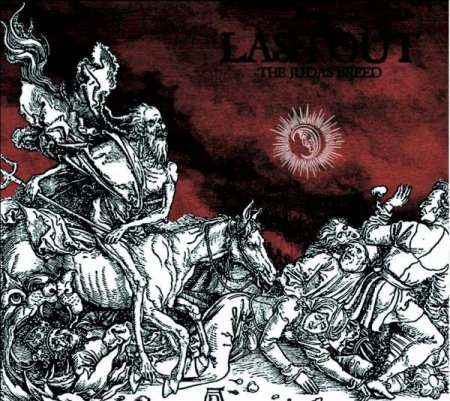
Like
Integrity which choose to take the moderated approach
to the problem of good and evil, light and dark, though a clear
tendency to
semi grotesque motives. Albrecht Dürer (1471–1528)
and his woodcut
illustrations from The Revelation of John, “St
Michael and the Dragon”,
as we used a fragment from on The Darkest Hour and Judas
Breed was
the perfect motives for a hardcore band with a certain distance to the
battle
of the two forces, but nevertheless completely sold to the dark themes
of
metal.
So what future Plans do you have for
Lash Out? Any
important shows coming up? Will we ever see new recorded material?
D
O U B L E H U M A
N:
The
Future plans for Lash Out equals none so far. We never
planned any steady reunion or comeback, nor have we discussed the
possibility
of any more material recorded and released for the future. But many of
us are
still doing music, though in a wider palette of sound, probably at its
most
extreme with me, both listening and creating Black Metal and commercial
pop at
the same time. I have my D O U B L E H U M A N project coming up, with
2
releases in near future, and 1release with my old s p a z t x project,
releasing a sort of “Best of…”, and also the BACK DOWN EP will be
recorded
before xmas, VINTERBLEK is probably set for next year.
“Caress
us with the
solitude” of some final words.
D
O U B L E H U M A N:
Thanks
for the patience and support, man. I am proud to
have supporters like you, keeps one going, you know. Keep up the good
work!
If you wish to check out the music of Lash Out then hear one of my favorite tracks here:
http://www.youtube.com/watch?v=ZG3-oonGi7k
------------------------------------------------------------------------------------------------------------------------------------------------------------------
[1]
V/A: This Is Boston, Not LA:
US hardcore punk compilation with The Groinoids, Decadence,
The Proletariat,
The Freeze, The F.U.'s, Jerry's Kids, and Gang Green. (Modern
Method, 1982)
[2]
Youth Of Today: We re Not In This
Alone (Caroline Records, 1988).
[3]
A jargon within the band at the time for projecting
the neck of the “axe”, guitar or bass, in the air, in a stylish
synchronized
manner, typically at specific parts of the many rhythmic, “closed”,
thugga
thugga, “March of the Banned” riff parts in E. The
term refers to US
Hardcore outfit Strife, one of the first bands that
springs to my mind
doing it in a sort of calculated fashionable way. However, it
lends its
soul to an old tradition within the circus of rock n roll, right down
to Little
Richard, Chuck Berry, Elvis Presley, Johnny Cash, Jimi
Hendrix, Pete
Townsend, Jimmy Page, Angus Young, Johnny Thunders and many
more. The
mighty Chain Of Strength, the sharpest department
of style to ever
emerge from that template of US hardcore at the time, and Beyond
were
doing it already in 1988, but in a less systematic and more impulsive
style. At
some point in 1994, everybody was doing it. But of the European acts, Lash
Out and Abhinanda must have been some of
the first to “Strife a
Pose” in a larger, more Heavy Metal kind of proportion.
[4]
Lash Out: ”A New Face”, demo 1993, released on the Judas
Breed album(Get By Records,2011).
[5]
Integrity: ”For Those Who Fear Tomorrow”
(Overkill Records, 1992)
[6]
A insiders term for the three genre
defining albums Darkthrone released in a row, starting with A
Blaze In The
Northern Sky (Peaceville, 1992), Under A Funeral
Moon (Peaceville,
1993) and Transylvanian Hunger(Peaceville, 1994).
[7]
The biggest and most popular mountain
area in Norway. “Jotun” refers to Norse Mythology, “the home of the
Jotuns”.
[8]
Nosferatu, eine Symphonie des
Grauens, German motion picture by F.W Murnau from 1922. Remade by
Werner
Herzhog in 1979.
[9]
Pantera: VulgarDisplay of Power(Acto,
1992)
[10]
A paraphrase from the Lash Out song ”Weak”,
featured on the The Darkest Hour 12”(Stormstrike,
1993).
[11]
Jean-Paul Marat (1743-93): French
radical writer, politician and revolutionary fire starter and extremist.
[12]
The Germs: ”Manimal” (G.I, Slash
Records,1979)
[13]
Niccolo Machiavelli (1469-1527)
was an Italian historian, politician, philosopher, diplomat
and war
strategist who, posthumous, was identified as the original founder of cynicism
in politics, as Thomas Hobbes(1588-1679), English philosopher came up
with an
outlook on human ethical praxis and social interaction, who radicalized
the old
traditional ill perceived notion of a society taking place as a natural
result
of the “good” nature of human beings, the decadent late Athenian
conviction of
“the right knowledge assures the right deeds”. He claimed a peaceful
and
civilized society could only have been born out a common fear of the
lethal risks
of the ultimate anarchy, the theory of the “social contract”, which
Hobbes
introduced in his classic work of philosophy, Leviathan
(1651). The magnum
opus of Machiavelli was equally believed to be The
Prince (1532),
even though he wrote other treatises on other subjects that were far
more
complex, advanced and influential.